How to Choose the Right Bagging Machine?

Choosing the right bagging machine is rarely a simple matter of comparing prices and production speeds. The decision begins with the product itself. Powder, granules, fresh produce, frozen goods, and irregular parts behave differently during filling. A machine that handles rice smoothly may struggle with sticky fertilizer or fragile snacks.

Packaging machinery specialist Jorge Izquierdo is often cited for a practical warning: “The right machine must fit the product, not just the package.” This principle deserves attention. A reliable bagging machine should match the material’s flow characteristics, target weight, bag dimensions, sealing method, and expected output. It should also suit the available floor space, labor skills, cleaning routine, and maintenance budget.

Details matter.

Watch the product fall.

Observe the seal.

Ask about changeover time.

A practical evaluation should include live testing with your actual material. Request samples from the machine’s weighing system, inspect seal strength, and measure weight variation across repeated bags. Review the control interface, spare-parts supply, safety guarding, and technical support before signing an agreement. These points often matter more than a dramatic speed figure in a brochure.

There is no perfect choice. Even experienced buyers can underestimate dust control, moisture exposure, or future packaging changes. I have found that teams sometimes focus too heavily on today’s output and overlook tomorrow’s product range. A thoughtful selection process accepts some uncertainty, records its assumptions, and tests them before purchase. The best bagging machine is not merely fast; it is dependable, maintainable, and genuinely suited to the production environment.
How to Choose the Right Bagging Machine?

Define Your Product, Bag Size, and Required Packing Speed

Choosing a bagging machine starts with the product, not the machine’s brochure. In packing trials, I have seen dusty powder behave differently from crisp pellets. Granules may flow evenly, while sticky products bridge above the filling point. Record bulk density, moisture, particle shape, and temperature before requesting quotations. Small differences can change the feeder, sealing method, and cleaning routine. Do not guess here.

Define the bag carefully. Measure its width, length, opening, material, and target weight. A 25-kilogram woven bag needs different handling from a 500-gram laminated pouch. Consider whether the bag arrives flat, open-mouth, or pre-formed. Check how the filled bag will move afterward. A narrow conveyor may create unstable stacks. The detail matters.

Packing speed should reflect real production conditions. State the required bags per minute, but include weighing, sealing, product settling, and changeover time. A fast filler is not useful if accuracy falls during continuous operation. My first speed estimate was too optimistic because I ignored cleaning pauses. That mistake changed the final output significantly. Run a product test with your actual bags and target weights. Check dust, rejected bags, seal quality, and operator workload. Leave some capacity for seasonal demand, but avoid paying for speed your line cannot use.

Match the Machine Type to Your Material and Bag Design

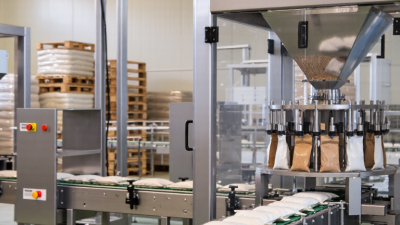
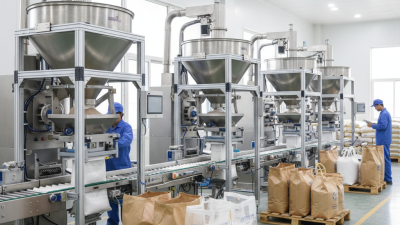
Choosing the right bagging machine starts with the material, not the machine’s advertised speed. Fine powder behaves differently from dry granules or irregular pellets. Powder may bridge, escape through seams, or create dust around the filling spout. Granules need controlled drops and gentle handling to reduce crushing. Match the product flow to the feeder. Auger feeders suit many powders, while gravity or vibratory systems often suit free-flowing solids. Then study bag design. Open-mouth bags, valve bags, and woven sacks require different filling, clamping, and sealing arrangements. A narrow bag opening can restrict output, even when the machine has a powerful motor. The right fit protects weight accuracy and package appearance.

Tips: Test the actual material in the actual bag. Check fill weight, dust, sealing strength, and changeover time. Keep sample bags nearby during trials. Small details matter.

Reliable selection also depends on operating conditions. Consider moisture, bulk density, temperature, bag dimensions, and expected daily volume. Ask for repeatability data, maintenance access, and operator training. A machine may fill quickly but still waste material during adjustment. That trade-off is easy to miss. I would leave room for improvement, because real materials vary between batches. A practical trial often reveals awkward handling or weak seals before installation. Do not approve the design from a brochure alone.

How to Choose the Right Bagging Machine? — Match the Machine Type to Your Material and Bag Design

Material Characteristics Recommended Machine Type Suitable Bag Design Typical Fill-Weight Range Typical Production Range Key Advantages Important Selection Considerations
Free-flowing granules
Examples: rice, beans, plastic pellets, seeds and dry grains
Net-weighing bagging machine
Multihead or linear weighing systems are suitable when accurate portion control is required.
Open-mouth woven polypropylene, paper, polyethylene or laminated bags 0.5–50 kg 10–35 bags/minute Accurate weighing, flexible recipe changes and good compatibility with free-flowing products Check product size distribution, dust generation, target accuracy and whether a sewing, heat-sealing or pinch-bottom closure is required.
Fine powders
Examples: flour, starch, mineral powder, powdered chemicals and cementitious products
Auger filling machine
Servo-driven augers provide controlled volumetric dosing, with gross or net weighing available for higher accuracy.
Valve bags, open-mouth laminated bags, paper bags and heat-sealable plastic bags 0.25–50 kg 5–25 bags/minute Effective dosing for cohesive powders and reduced product spillage during filling Consider bulk density changes, aeration, dust extraction, product bridging and the need for an integrated dust-tight filling spout.
Free-flowing powders
Examples: salt, sugar, detergents and some powdered food ingredients
Gravity or net-weighing bagging machine
Best for powders that discharge consistently without significant bridging.
Valve bags, open-mouth bags and form-fill-seal plastic bags 1–50 kg 8–30 bags/minute Simple material flow path, efficient filling and good suitability for high-volume production Verify flowability and dust behavior. A dust collection system and enclosed filling zone may be necessary.
Pellets and irregular granules
Examples: animal feed, fertilizer granules, wood pellets and plastic regrind
Gross-weighing or net-weighing machine
Choose a robust weighing system with a large product inlet for higher rates.
Open-mouth woven bags, polyethylene bags, paper sacks and valve bags 5–50 kg 8–25 bags/minute Durable construction, good output and suitability for abrasive or heavy products Select wear-resistant contact parts, a reinforced bag clamp and a filling system that minimizes product breakage.
Fragile or breakable products
Examples: snack foods, pasta, biscuits and delicate agricultural products
Multihead weigher with controlled discharge
Gentle product handling is preferred over high-speed impact filling.
Pillow bags, gusseted bags, stand-up pouches and pre-made laminated bags 0.05–5 kg 20–70 bags/minute Accurate combination weighing with reduced product damage when discharge height is controlled Review drop height, hopper geometry, film sealability, bag opening size and the required gas-flushing or modified-atmosphere option.
Sticky, oily or moisture-sensitive products
Examples: pet food with oil coating, dried fruit, confectionery and treated seeds
Multihead weigher or linear weigher with anti-stick surfaces Heat-sealed laminated pouches, gusseted bags and high-barrier pre-made bags 0.1–10 kg 12–45 bags/minute Flexible portion control and compatibility with barrier packaging Specify stainless-steel contact surfaces, easy-clean construction, suitable seal temperatures and protection against product contamination.
Large, heavy or abrasive materials
Examples: aggregates, pellets, construction materials and industrial granules
Heavy-duty gross-weighing bagging machine Heavy woven polypropylene, paper multiwall sacks, polyethylene bags and valve bags 10–50 kg 4–15 bags/minute Strong weighing frame, robust bag support and reliable operation under demanding conditions Confirm floor loading, bag strength, abrasion resistance, dust control, filling-spout durability and palletizing requirements.
Products requiring clean or hygienic handling
Examples: food ingredients, pharmaceutical excipients and nutraceutical powders
Sanitary auger or net-weighing machine Food-grade open-mouth bags, sterile or high-barrier pouches and lined paper bags 0.05–25 kg 5–25 bags/minute Hygienic design, controlled product contact and easier cleaning or inspection Look for stainless-steel construction, tool-less changeover, minimal product traps, validated cleaning procedures and suitable environmental protection.
Small retail packs with frequent product changes
Examples: snacks, pet treats, seeds, hardware and household products
Vertical form-fill-seal or pre-made pouch machine Pillow bags, three-side-seal pouches, quad-seal bags, stand-up pouches and zipper bags 0.01–5 kg 20–100 bags/minute Compact packaging line, integrated film forming or pouch handling and efficient retail presentation Match the machine to film width, pouch dimensions, seal type, zipper requirements, printing registration and product headspace.
Valve-bag applications
Examples: cement, mortar, plaster, mineral powders and industrial powders
Impeller, air-packer or screw-type valve bag filling machine Paper valve bags, woven polypropylene valve bags and laminated valve bags 10–50 kg 4–20 bags/minute Fast bag attachment, clean filling and automatic valve closure for compatible products Confirm valve dimensions, powder aeration behavior, air supply requirements, dust extraction and the need for bag densification.
Selection note: Actual capacity and accuracy depend on material bulk density, particle size, moisture, flowability, bag dimensions, target weight, operator workflow and the selected closure system. Always test representative product samples and complete bag trials before final machine selection.

Compare Filling, Sealing, and Automation Features

Choosing a bagging machine starts with the product, not the machine’s appearance.
Filling accuracy matters when powders, grains, or irregular pieces change flow during a shift. Measure target weight, tolerance, dust, and product temperature. A machine that fills quickly but creates frequent overweights may increase material loss. According to the U.S. National Institute of Standards and Technology, measurement errors can directly affect manufacturing costs and process confidence. Keep that risk visible.

Sealing deserves equal attention. Test seal strength, jaw temperature stability, film compatibility, and leakage after vibration. ASTM F88/F88M provides a recognized method for measuring flexible-package seal strength. Ask suppliers for test results using your actual film and product. Laboratory samples can look perfect. Production conditions may disagree. Changeover time is another practical measure; record the minutes needed to change bag length, film, and product settings.

Automation should reduce decisions, not hide them. Check recipe control, weight feedback, alarm history, remote diagnostics, and integration with checkweighers or conveyors. The International Federation of Robotics reported 541,302 industrial robots installed worldwide in 2023, showing how quickly automated production is expanding. However, more automation does not guarantee better output. MHI’s 2024 Annual Industry Report found that 83% of supply-chain professionals expect technology adoption to increase. Choose useful automation first. Then verify uptime, reject rates, operator training, and maintenance access. A cheaper machine may become expensive when every adjustment needs a specialist.

Check Equipment Capacity, Accuracy, Maintenance, and Safety

How to Choose the Right Bagging Machine?
Check Equipment Capacity, Accuracy, Maintenance, and Safety

Choosing a bagging machine starts with the material, not the machine’s appearance. In field evaluations, I check target weight, bag size, product flow, and hourly demand. A system rated for 1,000 bags per hour may struggle with dusty or irregular material. Capacity must match real production, including pauses for refilling and adjustments. Leave practical headroom.

Accuracy affects product cost and customer trust. Ask for test results using your actual material, not only standard samples. Check weight variation across short and long production runs. A clear calibration process helps operators correct drift without guessing. Small errors add up quickly. That matters.

Maintenance should be visible and manageable. Inspect access doors, wear points, sensors, seals, and spare-part availability. Operators should reach cleaning areas without unsafe climbing or awkward tools. A weekly inspection log can reveal loose fasteners, unusual vibration, or repeated jams. I have seen teams focus on speed and overlook cleaning time. That choice created delays later.

Safety requires guarded moving parts, emergency stops, stable platforms, and clear operating instructions. Confirm that training covers startup, shutdown, jam clearing, and lockout procedures. Test the emergency stop during commissioning. Do not assume it works. Ask workers to identify pinch points, because they often notice practical risks engineers miss. Documentation should be specific, current, and easy to use.

Evaluate Installation Support, Operating Costs, and Future Expansion

When choosing a bagging machine, examine installation support as carefully as machine speed. Ask who handles commissioning, operator training, and production trials. A reliable supplier should provide clear drawings, utility requirements, and troubleshooting procedures. Request a written response-time commitment for remote or on-site assistance. That matters.

During installation, record changeover time, rejected bags, and adjustments made by technicians. These details reveal practical performance better than a brochure. Experienced operators should test the machine with your actual product, bag sizes, and filling weights. Do not assume factory settings will suit your material. They may not.

Operating costs include electricity, compressed air, labor, spare parts, and cleaning time. Measure air consumption during a normal shift, not only during demonstrations. Check whether common wear parts can be replaced without long downtime. A cheaper machine can become expensive when small failures interrupt packaging every week. Review maintenance records from comparable installations when available.

Future expansion deserves equal attention. Confirm whether the controls can support additional bag sizes, weighing systems, or conveyor connections. Leave enough floor space for safe access and a second packaging line. Flexible equipment is useful, but excessive options can add complexity and training costs. I have seen expansion plans fail because utilities were undersized. A simple capacity forecast, reviewed with maintenance and production teams, can prevent that mistake. Consider today’s output, next year’s demand, and the skills your staff realistically possess.