2026 Top Jewelry Pouch Manufacturers for Global Buyers
Choosing the right Jewelry Pouch manufacturer in 2026 requires more than comparing prices and attractive product photos. Global buyers need dependable materials, consistent stitching, accurate branding, and clear communication from sampling to shipment. A pouch may look simple, but its fabric weight, lining, drawstring strength, and edge finishing can determine the customer’s entire unboxing experience.
This guide introduces leading Jewelry Pouch manufacturers for international sourcing projects. It focuses on practical production capabilities, customization options, quality-control methods, minimum order quantities, and export readiness. Experienced suppliers should explain material choices clearly, provide realistic production timelines, and share samples before large orders begin. Details matter. A soft velvet pouch with loose threads is not ready for premium jewelry, even when its quotation looks attractive.
The featured manufacturers are assessed through a buyer-focused lens rather than promotional claims alone. Their strengths may include recycled fabrics, cotton, satin, microfiber, printing, embroidery, or custom packaging development. However, no supplier is perfect. Some offer excellent craftsmanship but limited capacity, while others provide fast production with fewer customization choices. Buyers should request current certifications, inspection records, sample approvals, and written specifications before making decisions. Regional shipping conditions and import requirements can also change. Careful verification remains essential. This overview aims to help retailers, jewelry brands, wholesalers, and corporate buyers build a more reliable shortlist for 2026. It also recognizes an uncomfortable truth: the cheapest pouch can become the most expensive choice when defects, delays, or inconsistent branding reach customers.
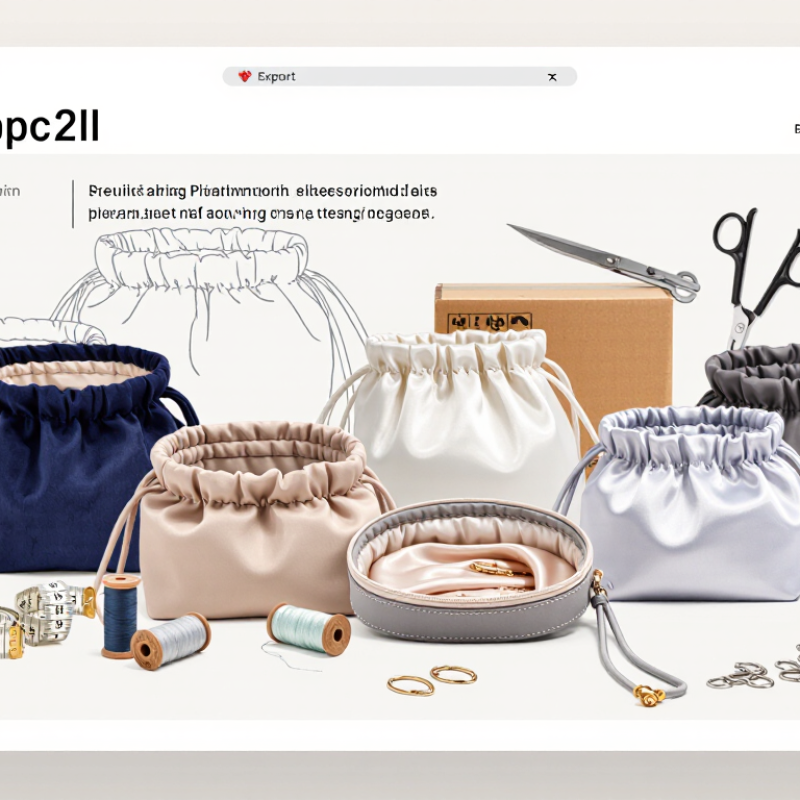
Market Scope: The $353.26B Jewelry Industry and Pouch-Supplier Demand
The jewelry industry is projected at $353.26 billion, creating steady demand for protective, attractive packaging. Jewelry pouches are no longer minor accessories. They support presentation, storage, shipping, and repeat purchases across global markets.
Supplier selection now requires practical evaluation. Buyers should check fabric weight, lining softness, drawstring strength, print durability, and dimensional consistency.
A 8 × 10 centimeter pouch may suit rings, but larger pieces need more depth and opening space.
Cotton, velvet, microfiber, and recycled fabrics offer different costs and handling results.
Material certificates and production samples can support reliable decisions.
A strong supplier should explain minimum order quantities, sampling fees, lead times, and inspection procedures clearly. Color matching under warehouse lighting is often overlooked. So is the risk of loose threads.
Packaging performance should be tested with real jewelry, not empty samples. A pouch that looks elegant may wrinkle during transit. That lesson is easy to miss.
Buyers should also review communication speed and corrective-action records before placing large orders. No supplier performs perfectly. Honest reporting matters more than polished promises.
Demand will likely favor suppliers that combine flexible customization, stable quality, and scalable production for retailers, workshops, and online sellers.
Pouch Types and Materials: Comparing Cost, Durability, and Brand Appeal
2026 Top Jewelry Pouch Manufacturers for Global Buyers
Pouch Types and Materials: Comparing Cost, Durability, and Brand Appeal
A jewelry pouch is not merely protective packaging. Its fabric, closure, and finish shape the buyer’s first tactile impression. Cotton drawstring pouches offer a warm, handmade feel and usually cost less at medium volumes. Velvet provides richer color depth, but it can attract dust and show compression marks during shipping. Microfiber protects polished surfaces well, although its synthetic appearance may weaken a natural product story.
Material choice also affects supply-chain decisions. Textile Exchange’s Materials Market Report 2024 states that polyester represented 57% of global fiber production in 2023. Recycled polyester accounted for about 12% of polyester output. This supports recycled microfiber and satin options, but recycled content alone does not prove durability. Request abrasion tests, colorfastness results, and closure-cycle testing from manufacturers.
Brand appeal needs practical evidence. A 2024 Smithers packaging analysis highlights lightweight flexible packaging as a route to reducing material use and transport impact. However, thinner fabric may tear around metal eyelets or packed corners. That trade-off is easy to miss. I would compare a sample after repeated handling, not only judge its showroom appearance. Small details matter: a soft inner lining, a quiet drawcord, and stitching that survives 30 opening cycles can influence perceived value more than a glossy logo.
Sustainability Screening: GRS Requires at Least 50% Recycled Content
For global jewelry pouch buyers, GRS screening should begin with the fiber claim, not the hangtag. The Global Recycled Standard requires at least 50% recycled content in a certified product. It also examines chain of custody, social practices, chemical controls, and environmental processing. A supplier’s certificate alone is not enough. Request the scope certificate, transaction certificate, material composition, and production-site details.
Textile Exchange’s Materials Market Report 2024 estimated global fiber production at 124 million tonnes in 2023. Recycled fibers represented about 7.6% of total output. Recycled polyester accounted for roughly 12% of polyester production, while recycled cotton remained below 1%. These figures reveal a supply gap. Recycled polyester lining may be easier to verify than recycled cotton velvet.
During sampling, weigh the shell, lining, thread, padding, and coating separately. A pouch can contain recycled fabric yet miss the 50% threshold after trims are counted. Ask for batch-level evidence. Sustainability language can be too broad. Test abrasion, colorfastness, seam strength, and odor after storage. Recycled content does not guarantee a premium feel. Uneven flocking still happens. The harder question is whether a smaller pouch, fewer layers, and longer use could reduce impact more effectively.
Compliance Check: EU REACH Uses a 0.1% SVHC Disclosure Threshold
For global buyers, EU REACH compliance begins with the 0.1% SVHC disclosure threshold. This limit applies to each article, not only the finished pouch. A velvet pouch may include a PU coating, metal clasp, adhesive, or dyed lining. If any article contains an SVHC above 0.1% by weight, suppliers must provide safe-use information. Consumers can also request this information. The threshold triggers disclosure, not an automatic sales ban.
ECHA’s 2023 REF-10 enforcement report found 18% of inspected products were non-compliant. This figure shows why supplier declarations alone are not enough. Buyers should request material-level test reports, production dates, and laboratory methods. Check coated fabrics and metal components separately. In practical audits, teams often examine the fabric but overlook the zipper coating. That mistake is small, yet costly. The ECHA Candidate List also changes over time, so an old certificate may become unreliable. REACH obligations should be reviewed before each major order.
Tips: Ask manufacturers for a current SVHC declaration and supporting test report. Confirm the tested material matches the production sample. Keep purchase records and supplier responses for traceability. Do not treat “REACH compliant” as detailed evidence. It is only a starting point. A better process links every pouch component to its material source, test date, and batch number. Some documentation may still be incomplete; buyers should record that gap and request correction before shipment.
Supplier Ranking: MOQ, Capacity, QC, Lead Time, and Export Performance
2026 Top Jewelry Pouch Manufacturers for Global Buyers
Supplier rankings should begin with measurable evidence, not polished catalogs. MOQ remains important because small retailers may need 300 to 1,000 pouches per design. Larger programs often require stable monthly capacity, documented production schedules, and backup material sources. Capacity figures should be verified through factory records, not sales claims. Lead time also matters. A reliable supplier can explain sampling, bulk production, inspection, and shipping separately.
Quality control should cover fabric weight, stitching density, drawstring strength, color consistency, and logo placement. Request pre-production samples and a signed specification sheet. For export performance, review shipment history, packaging methods, customs documents, and experience with different destination requirements. On-time delivery rates are useful, but they can hide partial shipments. Ask for the full picture.
Tips: Compare at least three suppliers using the same scorecard. Check one recent production batch if possible. A low MOQ may bring higher unit costs or weaker material choices. Do not ignore communication speed; delayed answers often predict delayed approvals. My own sourcing reviews have shown that attractive samples can fail after repeated opening and closing. That is an uncomfortable detail, but it deserves attention. A ranking is never permanent, since capacity, labor conditions, and lead times can change during peak seasons.